Zero Trust Security

Zero Trust Security for Hampshire Businesses — What It Is and How We Manage It For You

Your antivirus works hard. Every day it scans for threats it already knows about, blocks the ones on its list, and flags anything suspicious.

The problem is that cybercriminals know this too.

Modern attacks don’t look like viruses. They hide inside legitimate software, use tools that are already on your computer, or arrive via a phishing email that your antivirus has no reason to block. By the time your antivirus recognises the threat, the damage is already done.

This is why more businesses are moving to a different approach — and it’s called zero trust security. Zero trust security offers a robust framework for protecting sensitive data and systems.

What does “Zero-Trust” Actually Mean?

Zero trust security is not just a buzzword; it’s a crucial framework for protecting your business.

Implementing zero trust security is essential in today’s threat landscape, where traditional methods often fall short.

zero trust security small business / application whitelisting hampshire / zero trust security hampshire

The name sounds technical. The idea is straightforward.

Traditional security works on a blocklist: it tries to identify everything *bad* and stop it. The trouble is, there’s always something new it hasn’t seen yet.

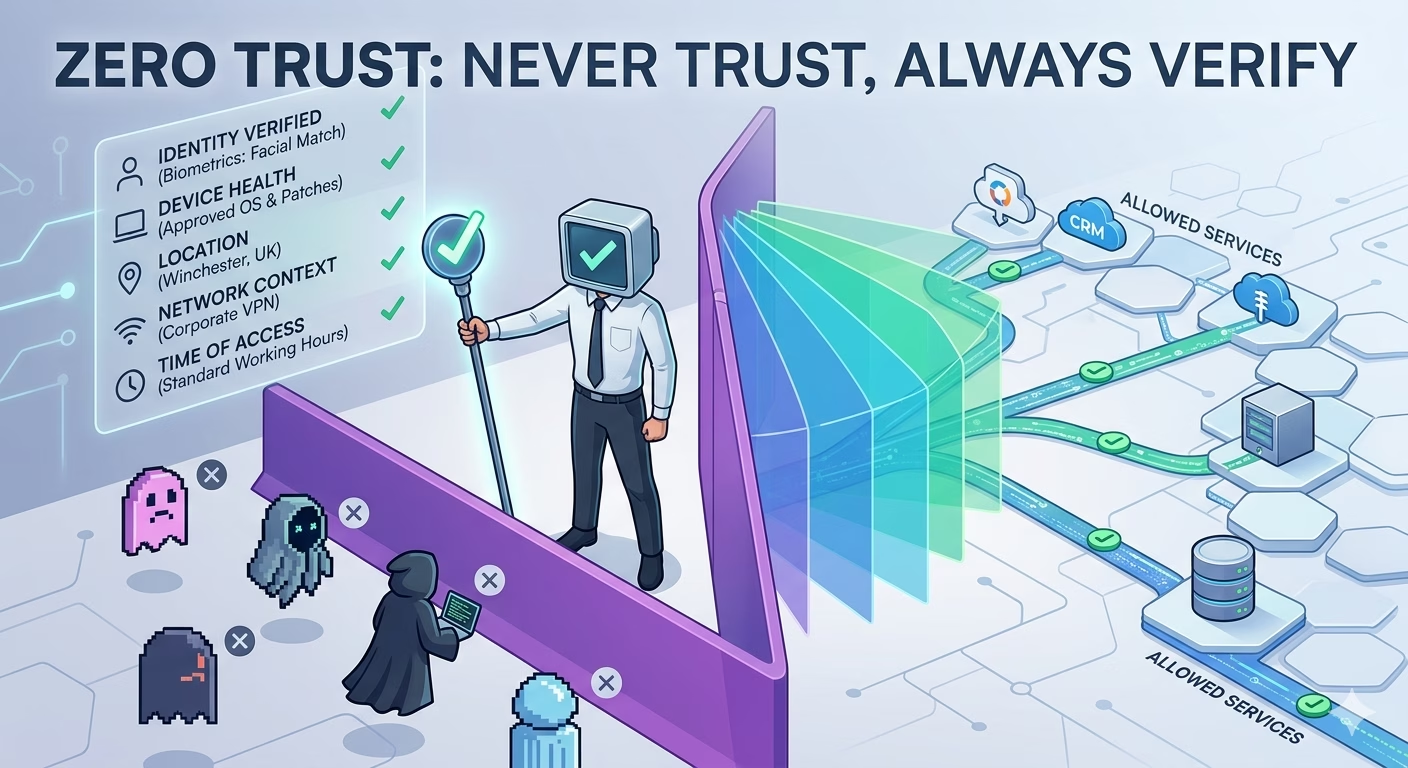
Zero trust flips this around. Instead of asking “is this dangerous?”, it asks “has this been approved?”

This approach is crucial for businesses looking to enhance their zero trust security posture.

If the answer is no — it doesn’t run. Full stop.

Nothing gets through because it’s new, or clever, or disguised. It gets through only because someone deliberately allowed it. That’s a fundamentally different level of protection.

How Application Whitelisting Works — Without the Jargon

The way we deliver zero trust is through application whitelisting. Here’s how it works in practice:

Weeks one – three — learning mode.

The software watches your systems and builds a picture of everything that normally runs on your machines: your accounting software, your Microsoft 365 apps, your PDF reader, your line-of-business tools. It learns what your business actually uses.

After week three — lockdown.

From that point forward, only what’s on the approved list can run. Everything else — including ransomware, malware, and software you didn’t know had been installed — is blocked automatically before it can do anything.

Ongoing management.

When you need to install something new — a software update, a new tool, anything — we approve it. You don’t deal with popups, blocked screens, or IT headaches. You just tell us, and we handle it.

That last part matters. A lot of businesses look at zero trust and think it sounds complicated and high-maintenance. Done properly, as a managed service, it isn’t. You don’t see most of it working. You just stop having incidents.

Zero trust security is not just a concept; it’s a necessary strategy for mitigating risks and ensuring business continuity.

Zero Trust vs Antivirus — What’s the Real Difference?

ANTI-VIRUS ZERO-TRUST (APPLICATION WHITELISTING)
HOW IT WORKS Blocks known threats Only allows approved software to run
NEW/UNKNOWN THREATS Vulnerable until updated Blocked by default
RANSOMWARE May catch it, may not Can't run — it's not on the list
FILELESS ATTACKS Often invisible to it Blocked at kernel level
MANAGEMENT Runs automatically Managed by BITSmart on your behalf

Antivirus is still worth having — it catches the everyday, well-known stuff quickly. But for a business that can’t afford a serious incident, zero trust is the layer above it that handles everything antivirus was never designed for.

Is This Just for Big Companies?

It used to be. Enterprise security tools were expensive, required dedicated IT staff to manage, and came with months of complex deployment.

Zero trust security solutions allow small businesses to adopt the same rigorous security measures that large enterprises use.

That’s changed. Zero trust platforms are now built to be delivered through IT partners — specifically so small and medium businesses can access enterprise-level protection without an in-house security team.

The businesses that get hit hardest by ransomware and cyber attacks are often small ones — not because they’re specifically targeted, but because they’re easier. 39% of UK businesses reported a cyberattack in the past year. The average cost of a breach for a small business is £15,300, and that’s before you count the downtime, the reputational damage, and the stress.

Investing in zero trust security can protect against the growing number of cyber threats facing businesses today.

Zero trust isn’t overkill for a small business. It’s the right level of protection for what the threat landscape actually looks like right now.

By implementing zero trust security, companies can significantly reduce their vulnerability to cyberattacks.

Cyber Essentials First, Then Zero Trust!

cyber essentials and zero trust

If you haven’t achieved Cyber Essentials certification yet, that’s the right starting point. Cyber Essentials gets the basics locked down — patching, access controls, firewalls, secure configuration. It’s the foundation.

Zero trust security is integral in establishing a strong cybersecurity framework for your organisation.

Zero trust is the next layer up. Once your fundamentals are solid, application whitelisting is how you stay protected as threats evolve.

The implementation of zero trust security measures will enhance your overall security infrastructure.

We can help you with both — and because we handle everything, you don’t need to understand the technical detail. You just need to know your systems are covered.

How BITSmart Manages Zero Trust For You

Choosing zero trust security is a proactive step towards safeguarding your business from cyber threats.

We now offer zero trust security as a fully managed service for our clients across Hampshire.

Here’s what that looks like in practice:

  • We deploy and configure the platform across your devices
  • We run the learning phase and build your approved application list
  • We manage everything on an ongoing basis — you don’t see or touch the settings
  • When you need something new installed, you ask us and we approve it
  • If something attempts to run that shouldn’t, we see it and handle it

Everything runs through us. That’s the whole point.

If you’re a business owner in Hampshire who’s been meaning to sort out your cybersecurity properly — or if you’ve just renewed your antivirus and wondered whether it’s really enough — this is worth a conversation.

In conclusion, adopting zero trust security is essential for any modern business aiming to protect itself effectively.

Let’s have a conversation!

The best way to see if BITSmart.tech is a good fit is to talk.

IT works best when there’s trust on both sides. Let’s get to know each other and discuss how we can support your business now — and as it grows.

And if you’re based in Hampshire and want to meet face‑to‑face… we might even bring cake.

Frequently Asked Questions

Zero trust is a cybersecurity approach where nothing is allowed to run on your systems unless it has been explicitly approved. Instead of trying to block known threats, it blocks everything by default and only permits software you’ve authorised — making it effective against ransomware, malware, and attacks that traditional antivirus wasn’t designed to catch.

Ultimately, implementing zero trust security provides peace of mind in an unpredictable digital landscape.

Not necessarily. Antivirus and zero trust work well together — antivirus handles known threats quickly, zero trust handles everything else. We’ll advise on the right setup for your business when we talk.

After the initial learning phase, no. We manage the approved application list on your behalf, so when you need new software you just ask us and we sort it. Most clients don’t notice it’s running — they just notice they stop having problems.

Yes. Modern zero trust platforms are built specifically to be delivered through IT partners like BITSmart, so small and medium businesses can access enterprise-level protection without needing an in-house IT or security team.

Zero trust security ensures that your business is not only compliant but also resilient to emerging threats.

Most small businesses rely on antivirus, which blocks threats it already knows about. Zero trust works the other way — nothing runs unless it’s been explicitly approved. It’s a fundamentally different level of protection, especially against ransomware and modern attacks that antivirus wasn’t designed to catch.

Adopting zero trust security is a key factor in the long-term success and security of your business.

Our suppliers include: